News
Industry news — everything published over the last few days: hardware and software, web development, infrastructure, machine learning. Each story can be explored in more depth at its source — Tom's Hardware, The Register, TechRadar, The Verge and The New Stack.

The Nyrius Phoenix Home is a new wireless HDMI adapter with 500ft line-of-sight range, 75ft through walls or floors Delivers 4K resolution with Dolby Atmos, DTS and 7.1-channel surround support Launches for $199.99 for the basic transmitter and receiver The Nyrius Phoenix Home is a true 4K wireless streamer that takes an HDMI source such as your games console, Apple TV 4K or Blu-ray player (or any combination through an AV receiver) and sends it to your TV, projector or desktop monitor. It's designed to be simple, so there's one HDMI input on the transmitter and one HDMI output on the receiver — and it promises a 500-foot range in plain air, or 75 feet through walls and floors. This means it

The US Treasury's FinCEN arm asks financial institutions to file scam center suspicious activity reports under a new keyword FinCEN says that it flagged financial moves across 33,904 different filings, but actual losses might differ significantly, as the approach is prone to double-counting transactions Only 1,300 institutions filed reports, with 10,082 (29.7%) of them centering around exploitation of the elderly by scammers The US Treasury's Financial Crimes Enforcement Network has issuespublished an alert and a companion data analysis telling banks, credit unions, digital asset exchanges, and securities firms that it needs sharper reporting on the overseas scam centers that it says target
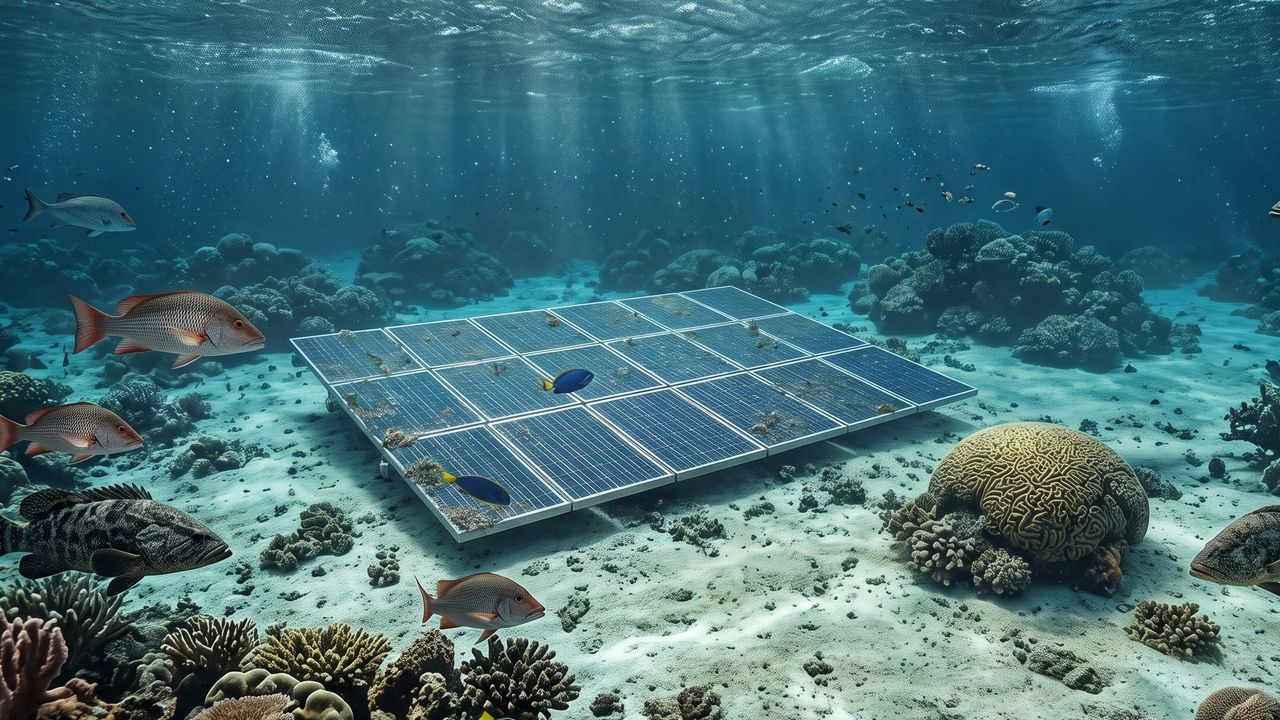
Scientists have developed solar panels that can work up to 10 meters underwater The panels can capture up to 324 mWh of energy at that depth Each device is expected to last up to five and a half years at a time A lot of devices are deployed underwater for research and exploration purposes, but powering them all can prove to be difficult, especially if they’re under the waves for a considerable period of time. A new scientific paper , however, has shown that solar panels can be successfully used at depths of up to 10 meters, potentially presenting a new way to keep underwater tech powered up and ready for action. The paper was published in the Joule periodical and accompanied by a press relea
I wore Snap’s $2,200 smart glasses

My favorite part of wearing the Specs, Snap's new augmented reality glasses, was playing dominoes. Sitting across the table from a Snap employee wearing the same pair of chunky glasses, I could select a virtual domino with a pinch and then move my hand to drop it in place, watching the tile snap down in front of us on a real table. It was unlike anything I've tried in other VR headsets or smart glasses - the ability to sit with another person and have a shared digital experience. Snap really believes in AR glasses. The company has spent more than half a decade developing the technology, producing two generations of glasses that only ever sh … Read the full story at The Verge.
Snap is launching a new Specs AI tool, and it’s coming to iOS and Mac

Snap is introducing "Specs Intelligence," a new AI assistant that can connect other digital accounts to help you with things like work tasks and keeping track of travel information. It seems similar to AI assistants like Meta's Muse and Gemini's Spark, though Snap is pitching Specs Intelligence as an "anticipatory AI service" that "helps you manage what needs attention today, so you can make progress toward your longer-term goals." Like with other AI assistants, you can also chat with it. Specs Intelligence is being launched alongside Specs, Snap's first consumer pair of augmented reality glasses. But it's also available on iOS today in pre … Read the full story at The Verge.
If a Mac mini is agentic overkill, try this glowing pyramid that runs personal bots
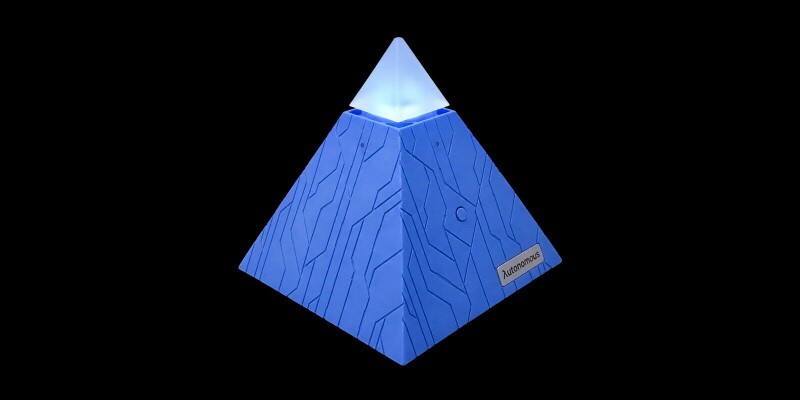
Autonomous.ai, an eleven-year-old manufacturer of techno-toys, high-end workstations, and office furniture, has released a small machine called Intern 2 for running AI agents like Hermes or OpenClaw. The company's first Intern device shipped in March, around the time OpenClaw became popular. "People use them for various tasks in a creative way," said Dee Tran, head of AI hardware. "The most common use cases are repetitive cronjobs, loops, and scheduled tasks." Priced at $299, the 4.7-inch pyramid-shaped machine looks more ornamental than computational. We're not sure exactly what's inside because the company's product listing says it includes an OrangePi board, but its press release says it

A pseudonymous GitHub account has published what it calls a reconstruction of Stuxnet malware that purportedly took out a fifth of Iran's centrifuges before being discovered The original source has never surfaced, and the 'Stuxnet' moniker that the account uses comes from Symantec's coining of the name weeks after it was discovered The code remains unverified and untested, with some users indicating that it is likely an AI-generated replication of the original binaries' behavior, which has been widely documented A GitHub account has published what it describes as a faithful reconstruction of Stuxnet, the worm that sabotaged Iranian uranium-enrichment centrifuges. It also became the first pie

Panasonic launches new DMR-4X10¹⁰ 4K Blu-ray player in Japan Also includes 4K tuners, 10TB of local storage for recordings, Blu-ray recording, and support for cloud storage About $2,800 / £2,080 / AU$3,930 Blu-ray fans should be feeling blessed this month: with new players decidedly thin on the ground, September has brought us news of not one but two 4K Blu-ray players — though neither is really aimed at the average movie enthusiast. The new Panasonic DMR-4X10¹⁰ is a flagship 4K player with a bunch of other neat tricks up its sleeve, and while it's likely to stay as a Japan-only release, we're still happy to see new players being made. A 434,500 yen, which works out at about $2,800 / £2,080
AI agents can modify themselves without humans telling them to do so

The list of dodgy things AI agents can and will do on their own - like stealing people’s credentials, escaping onto the open internet, communicating via sneaky message boards, and hacking organizations - keeps growing. Agents can also replace their own underlying models without being instructed to do so, according to AI security testing lab Irregular. To be clear: these activities only occurred in a testing environment as part of an experiment designed to study agents modifying themselves. It did not happen in a real-world deployment. The study does, however, call into question how enterprises can and should govern these agent-initiated changes - and how to ensure they can control the agents
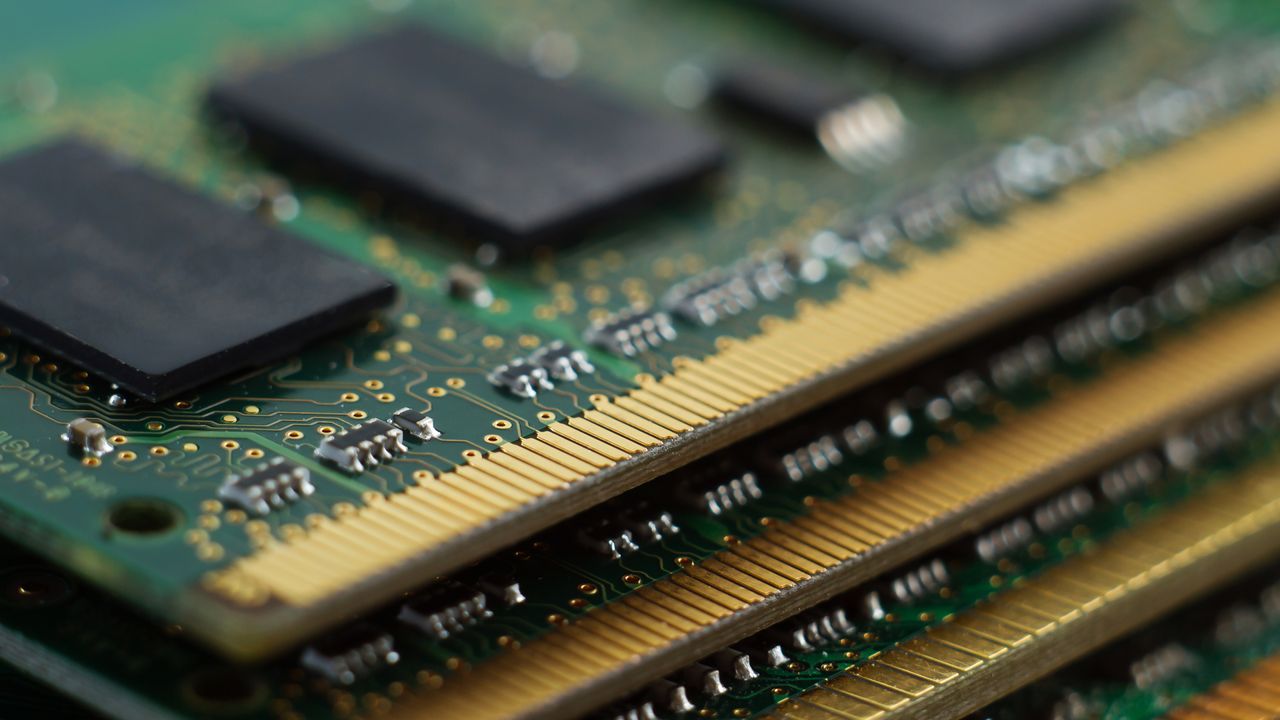
Future memory could be more durable thanks to developments with wurtzite ferroelectrics materials A new structural design has enabled a demonstration of 10 billion writing cycles, around 100 times the previous limit The breakthrough was made by scientists from the Xidian University working with the City University of Hong Kong and Fudan University. Next generation memory for future AI systems will need far faster and more durable performance, and scientific researchers in China seem to have made a breakthrough, demonstrating a new design which can complete some 10 billion writing cycles, 100 times more than the previous limit. This development – by teams at the Xidian University working with

It's hard to imagine how we'd interact with computers today without the work of engineer and inventor Douglas Engelbart, who pioneered many aspects of computer science and also invented the computer mouse. The breadth and depth of his work led him to believe that humanity's digital era could be the most significant in its history. The digital revolution Engelbart, then a researcher at the Stanford Research Institute where he led the development of interactive computing, was delivering a demonstration now considered by many as legendary. Quote of the day This article is part of TechRadar Pro's QOTD project to provide an insight into the minds of the brightest and most recognized figures in th
Perplexity’s AI agents helped build a database. They weren’t allowed to run it.

Perplexity decided it was paying too much for DynamoDB and wasn’t getting the control it wanted over read performance. So it built its own database: CobbleDB. Built by two engineers in two months with help from hundreds of persistent coding agents throughout development, CobbleDB is a roughly 40,000-line Rust key-value store that now handles part of Perplexity’s production search traffic. The company measured median batch-read latency at 5.6 milliseconds after the move, compared with 31.4 ms on DynamoDB before the cutover, while p99 went from 123 ms to 24.2 ms. It’s expected to cost at least 20% less than DynamoDB and plans to open-source the database at some point. But the
Nvidia goes green to keep grid capacity from zapping its revenues
Nvidia’s ability to sell GPUs is ultimately limited by how much juice the power grid can provide. With ever-growing depreciation cycles, it’ll be years before datacenters decommission their aging Hopper or Blackwell systems. More GPUs mean pulling more power from the grid. Nvidia can’t exactly force grid operators to add capacity any faster, but it can make it easier for its customers to build smarter and more efficient bit barns. “At the datacenter scale and at the AI-factory scale, we're literally trying to think about how can we eke out every bit of efficiency to drive more performance per gigawatt,” Dion Harris, senior director of Nvidia HPC and AI Hyperscale Infrastructure Solutions, to
The narrative that AI might end humanity in a decade has monopolized public discourse, so much so that we may be ignoring more prosaic, immediate AI concerns like jobs. I'm neither an AI doomer nor a booster. I believe generative AI has tremendous potential, especially for helping us solve our most difficult problems, like cancer and maybe resources and climate change. I'm also a realist and know that AI development and growth are clearly outstripping our ability to properly manage it. We should never have a situation where we do not know how or why an AI did something. The Hugging Face incident should be a call to action. In lieu of regulation (which the White House will block ), self-regul
The AI data center e-waste problem is huge — and getting bigger

E-waste from the AI boom has been vastly underestimated, a new report warns. By 2050, it could become enough trash to fill 23 million shipping containers - roughly enough 40-foot containers to circle the world six times if lined up in a row. It's a significantly higher estimate of AI's e-waste than previous studies have found because the authors of the new report factor in all the infrastructure needed to support servers in data centers. The broader scope provides a clearer picture of junk AI leaves behind, according to the nonprofit Basel Action Network (BAN) , which published the paper today. "AI may feel weightless, but every model dep … Read the full story at The Verge.